
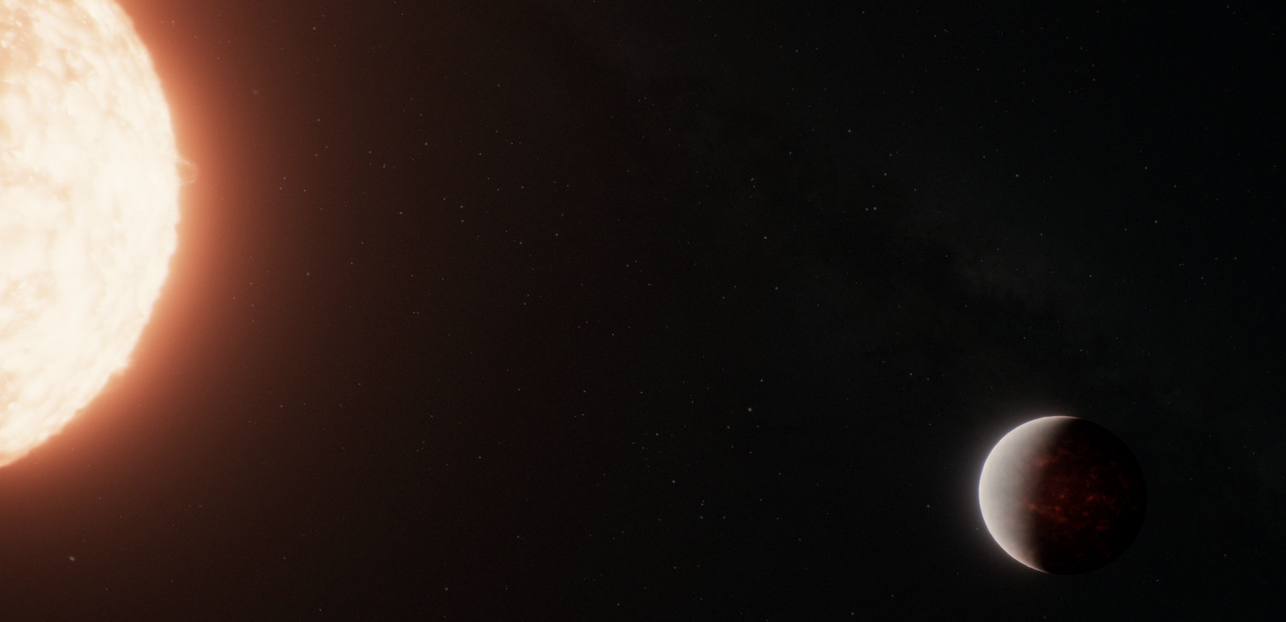
Scientists generally accept the hydrogen-burning limit around 0.08 solar masses. In practical terms, that equals approximately 80 Jupiter masses. Astronomers often call anything above this limit a red dwarf—the smallest true stars. These faint, long-lived stars dot our galaxy in huge numbers.
But why does mass matter so much? Gravity pulls harder on more massive objects. When a cloud of gas collapses under its own weight, greater mass creates stronger compression in the center. This squeeze raises the core temperature dramatically. Once the core hits about 10 million Kelvin, protons move fast enough to overcome their natural electrostatic repulsion. Fusion then begins: four hydrogen nuclei combine into one helium nucleus, releasing energy and light.
Without enough mass, the collapse stops short. Electron degeneracy pressure takes over before temperatures soar high enough. The object stabilizes as something else entirely.
What Happens Below the Mass Limit?
Objects with masses between about 13 and 80 Jupiter masses become brown dwarfs. These “failed stars” sit in a gray area between giant planets and true stars. They can fuse deuterium—a heavier form of hydrogen—for a short time, which provides a brief burst of energy. However, they cannot sustain regular hydrogen fusion over long periods.
Brown dwarfs glow dimly, mostly in infrared light, and they cool off gradually over hundreds of millions of years. Although larger than Jupiter, they never achieve the steady shine of real stars. For this reason, astronomers do not classify them as true stars. Instead, they represent an intriguing middle ground in cosmic evolution.
Consider Jupiter for comparison. Our solar system’s largest planet has only about 0.001 times the Sun’s mass—one-tenth of one percent. Even if you added up the mass of every planet, moon, and asteroid in the solar system, the total would still fall far short of the stellar threshold. Jupiter would need to grow roughly 80 times larger in mass before its core could approach the conditions for hydrogen fusion. Even then, subtle differences in composition and formation history might prevent a perfect transition.
A Simple Comparison of Cosmic Objects
Here is a quick breakdown to clarify the boundaries:
- Jupiter-like planets: Around 1 Jupiter mass. No nuclear fusion occurs.
- Brown dwarfs: Roughly 13 to 80 Jupiter masses. Deuterium fusion possible briefly, but no sustained hydrogen burning.
- True stars (red dwarfs and up): Above approximately 80 Jupiter masses, or 0.08 solar masses. Stable hydrogen fusion powers them for billions of years.
This clear cutoff helps astronomers classify objects they discover across the galaxy. Moreover, it explains why we see a gap—or at least a sparse region—between the heaviest planets and the lightest stars.
Understanding the Sun’s Scale
Our Sun contains about 2 × 10^30 kilograms of material. That figure sounds abstract until you break it down. The minimum stellar mass sits near 1.5 to 1.6 × 10^29 kg. In everyday terms, that works out to roughly 160 billion billion billion kilograms. Such vast numbers remind us how immense even the smallest stars really are.
The Sun itself is a medium-sized star. Its mass allows not only hydrogen fusion but also a stable main-sequence lifetime of about 10 billion years. Smaller stars burn fuel more slowly and can last much longer—trillions of years in some cases—while more massive ones race through their lives and end in dramatic explosions.
What If Mass Keeps Increasing?
On the other end of the spectrum, higher masses lead to very different outcomes. Stars significantly more massive than the Sun burn hot and fast. They swell into red giants later in life, then often explode as supernovae. The remnants can collapse further into neutron stars or black holes, depending on the exact mass left behind.
Yet the fundamental gateway to becoming a star remains that lower threshold of about 0.08 solar masses. Everything else—color, temperature, lifespan, and eventual fate—flows from how much mass the object starts with during formation.
How Stars Actually Form
Star formation begins in vast molecular clouds scattered throughout galaxies. Turbulence, shock waves from nearby supernovae, or spiral arm density waves can trigger collapse in denser clumps. As the gas falls inward, it heats up. Rotation and magnetic fields complicate the process, often leading to the formation of disks and multiple stars from a single cloud.
Throughout this collapse, mass determines the final outcome. Fragments with too little material never ignite fusion. Those with sufficient mass cross the critical line and settle onto the main sequence as stable stars. Observations with powerful infrared telescopes, such as those from the James Webb Space Telescope, continue to reveal these processes in stunning detail within nearby star-forming regions like Orion.
Furthermore, metallicity—the abundance of elements heavier than helium—can slightly shift the exact mass limit. Stars formed early in the universe, with fewer heavy elements, behave a bit differently than later generations like our Sun. Still, the broad picture holds: mass rules the destiny.
Why This Threshold Matters for Astronomy
Understanding the mass condition for star formation helps scientists model entire galaxies. It influences how many faint red dwarfs exist compared to bright, massive stars. It also affects planet formation, since brown dwarfs and low-mass stars host their own planetary systems in some cases.
Additionally, brown dwarfs serve as excellent laboratories for studying atmospheres, weather, and even potential magnetic activity without the complications of full stellar fusion. Researchers hunt for them to test theories of formation and evolution across the substellar boundary.
In recent years, improved models and observations have refined the hydrogen-burning limit to around 0.075 solar masses in some calculations, corresponding closely to 78 or 80 Jupiter masses. These small adjustments show how active the field remains. Nevertheless, the core idea stays consistent: gravity must overcome degeneracy pressure long enough to spark sustained fusion.
Looking Deeper into the Cosmos
Next time you gaze at the night sky, remember that every twinkling point of light represents an object that cleared that critical mass hurdle. The faint, reddish glows we struggle to see often come from the smallest red dwarfs that barely meet the requirement. Meanwhile, countless brown dwarfs drift unseen through the galaxy, glowing faintly in infrared.
This mass boundary not only defines what we call a star but also shapes the story of cosmic evolution. From collapsing clouds to shining beacons, mass sets the stage for everything that follows.
In summary, the journey from gas cloud to star hinges on a single key factor: having enough mass to ignite and maintain hydrogen fusion in the core. Below roughly 0.08 solar masses, objects become brown dwarfs that never fully ignite. Above it, true stars are born and light up the universe. As we move forward, continued observations will undoubtedly reveal more nuances in this fundamental process. The importance of this mass condition cannot be overstated, for it underpins the very existence of the luminous objects that make our cosmos visible. Looking ahead, the future seems promising as new telescopes probe deeper into star-forming regions and refine our understanding even further. Ultimately, these insights bring us closer to grasping how the universe builds its brightest inhabitants.
Leave a Reply